Canada Visitor Visa Refused? Start With the Letter
A refusal isn't a ban. Here's how to read the PDF, what paragraph 179(b) actually means, and what has to change before you pay the fee again.
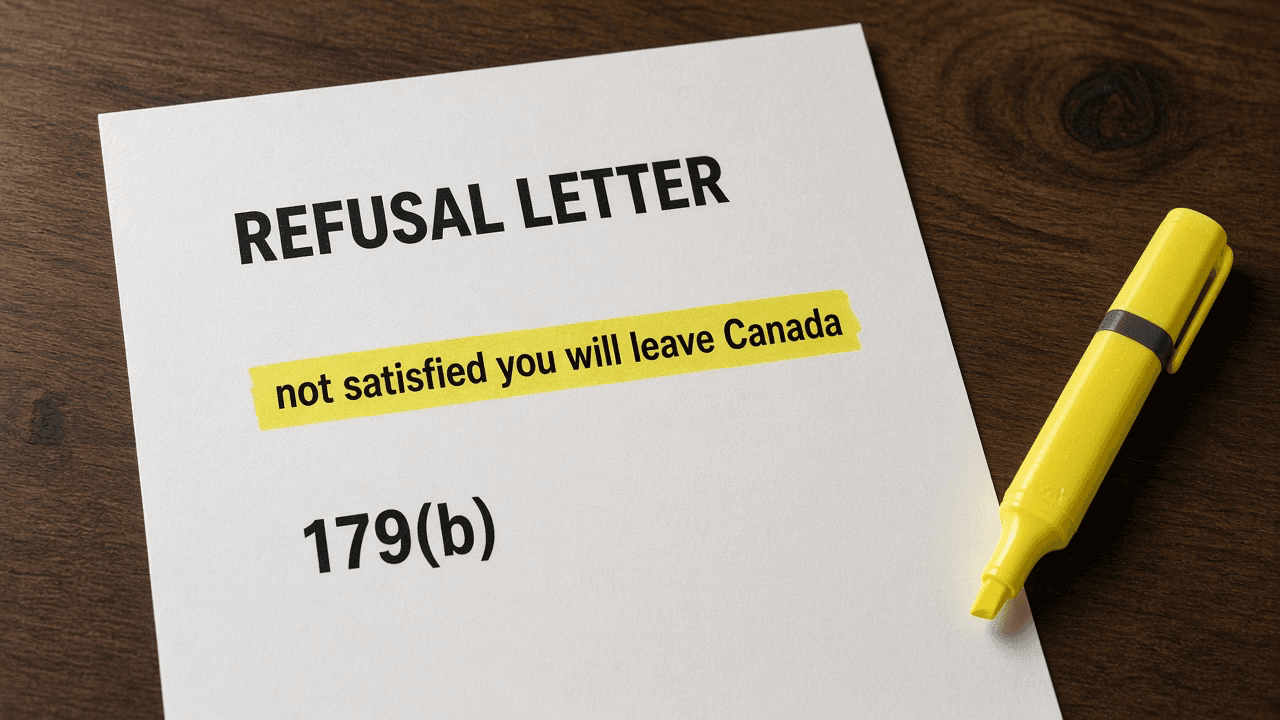
A Canada visitor visa refusal is a decision on the file you sent. It isn’t a ban. Most letters cite paragraph 179(b): the officer wasn’t satisfied you’ll leave Canada by the end of your stay. The lines under that sentence are the part to fix. Read them before you pay the fee again.
IRCC refused this file. You can still file another.
IRCC looked at the application you uploaded and decided it didn’t show you’ll leave at the end of your stay. That’s a temporary resident visa refusal. Another application is allowed. The ones that get a different result are the ones that change the part of the file the letter complained about.
Guessing is how the second refusal happens. A longer cover letter, a new photo, and the same bank PDFs don’t answer the officer. Start with the PDF they sent you, not with a template of someone else’s letter.
Step 1: The PDF has one test and a list of factors
IRCC doesn’t publish one fixed refusal letter. The wording moves by template and by office. Most visitor refusals still do the same job. They say the officer isn’t satisfied you’ll leave Canada at the end of your stay, they cite IRPR 179(b), and they list factors. A typical list includes your purpose of visit, your family ties in Canada and in your country of residence, and your personal assets and financial status. Travel history and employment show up on a lot of letters too.
Those factors sit under one test. Paragraph 179(b) is the leave-Canada requirement. Paragraph 179(c) is about your passport. Paragraph 179(d) is about meeting the requirements of the class. If your letter talks about purpose, money, or ties, it is talking about 179(b). Don’t rebuild the file around a subsection the officer didn’t cite.
Most of the sentences are standard. Look at which factors they ticked, and at any line that mentions your documents by name. That’s the officer’s concern. Copy those factors onto one line before you write anything else.
- The test
IRPR 179(b): the officer wasn’t satisfied you’ll leave Canada by the end of the authorized stay.
- Purpose of visit
The trip on the form and the paper in the file have to describe the same visit, with dates and a host.
- Personal assets and financial status
Where the money came from, whether you can use it, and whether it covers the trip. A high closing balance can still fail.
- Family ties
Who stays home, and who is already in Canada. A relative in Canada can cut both ways.
- Travel history
Where you’ve been, and whether you complied. A first passport isn’t an automatic refusal.
- Employment
Leave dates, pay that already lands in the account, and a job that’s still there when you get back.
Step 2: Work out which line actually failed
Letters often tick more than one factor. Usually one of them is the gap. A high bank balance can still fail finances, because the officer is reading source and access, not only the closing number. A real job letter can still fail ties. Match the new documents to the line they ticked.
Purpose of visit
The trip on the form and the paper in the file don’t describe the same visit. “I want to see Canada” isn’t a plan. Dates, a host, and an itinerary the bookings match are. The longer breakdown is purpose of visit. An invitation that didn’t change the result is usually about the host’s status.
Personal assets and financial status
IRCC doesn’t publish a dollar amount that approves a visitor visa. Officers look at where the money came from, whether you can spend it, and whether it fits the trip. A lump that landed on a low balance is its own problem. That’s the lump-sum deposits guide.
Ties and employment
Officers are weighing whether anything in the file pulls you home. A job title on letterhead isn’t the whole bundle. Leave dates, pay, property, and family who stay behind are. Read weak ties and employment.
Travel history
No prior visas to Canada, the US, the UK, Australia, or Schengen isn’t an automatic refusal. The officer is asking whether anything else in the file shows you comply and come back. If you have travel, even to other countries, put it where they can see it. The detail is under travel history.
What to put in the next file, line by line, is what to do after the refusal. A visit refused more than once, with the same gap each time, is the three-refusal graduation case.
Step 3: Read the note that came with the letter
Since July 29, 2025, IRCC attaches an officer decision note to most visitor visa refusals. It arrives with the letter. You don’t file a request to get it. Sometimes it repeats the PDF. Sometimes it keeps a line the letter cut, like a deposit the officer didn’t believe.
The full GCMS file is still separate. That’s the system the application lives in, and a copy of it is an Access to Information request. Order it when the decision note only repeats the letter. For a reapplication, start with the two documents you already hold.
Step 4: Don’t pay again until you can say what changed
You can apply again. There’s no waiting period. The previous application stays visible. Sending the same uploads, the same invitation, and the same unexplained deposit doesn’t answer 179(b). If you can’t point at one new document and the factor it answers, wait. The rule is on can I reapply.
If you want a second set of eyes on the PDF, paste the letter and the decision note if it came with it. The next screens ask for the facts those pages don’t contain: country, funds, ties, purpose. The free preview names the main issue and quotes the line it came from. The ranked analysis, if you want the evidence list and this week’s actions, is a one-time payment after that preview.
Stop when you can name the factor
If you can’t say which factor the letter ticked, you don’t yet know which page to add. Read the PDF, then the decision note if one came with it. The next upload should be aimed at that factor.
FAQ
Is a Canada visitor visa refusal a ban?
No. A refusal is a decision on the application you sent. You can apply again. The old file stays on IRCC’s system, so the next officer can see it. What changes the result is a file that answers the factors on the letter.
What does IRPR 179(b) mean on a visitor visa refusal?
Paragraph 179(b) says an officer issues a temporary resident visa if it’s established that you’ll leave Canada by the end of the period authorized for your stay. A refusal that cites 179(b) means that wasn’t established on the file you submitted. Purpose, money, ties, and travel history are factors under that test. They aren’t separate sections 179(c) or 179(d).
My letter lists purpose, finances, and ties. Which one matters?
Every factor the officer ticked is on the record. One of them is usually the gap the documents didn’t close. Read the sentence, then the list under it. If two are ticked, the next file has to answer both. The longer guide on the eight refusal lines is linked in this article.
Should I reapply the same day?
You can. There’s no waiting period for a standard visitor visa refusal. A file that matches the refused one usually gets the same result, because the next officer sees the prior refusal. Change the part of the file the letter named, then apply.
Do I need GCMS notes before I do anything?
Not first. Since July 29, 2025, IRCC attaches an officer decision note to most visitor visa refusals. Read that note with the letter. The full GCMS file is still a separate Access to Information request. Order it when the decision note only repeats the letter.
Related
You know how to read the letter.
You still don’t know which factor failed on yours.
Get the full analysis →Sources
- Immigration and Refugee Protection Regulations, section 179
- IRCC — Apply for a visitor visa
- IRCC — Officer decision notes, sent with most refusal letters since July 29, 2025
General information from the regulation and IRCC’s public pages. Not legal advice. Not a prediction of a visa decision.