Canada Visitor Visa Refused? The 8 Reasons Behind Most Refusals in 2026 (and How to Fix Each One)
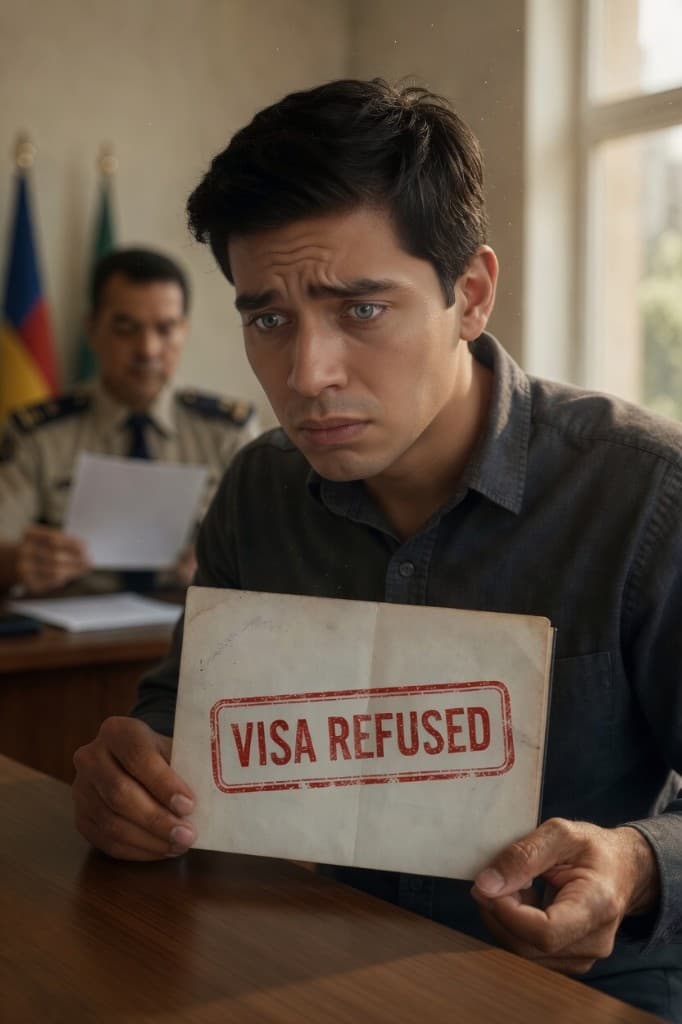
Every Canada visitor visa refusal letter sounds the same. The same paragraphs about travel history, ties to country of residence, purpose of visit, personal assets. The same final sentence telling you the officer is not satisfied. But under that boilerplate, every refusal is pointing at a specific gap in your file — and most of those gaps are fixable.
This is the 2026 edition of our deep dive on Canada Temporary Resident Visa (TRV) refusals: the eight reasons behind the overwhelming majority of refusals we see, what each refusal phrase really means in officer language, and the exact evidence that turns each gap into an approval on resubmission. If you have your refusal letter open in another tab, this guide is written for you.
If your refusal specifically mentioned weak ties to your home country, start with our deep-dive fix guide: Weak ties Canada visitor visa refusal — how to fix it. If you want the reapplication-specific playbook for the 2025–2026 IRCC environment — refusal rate context, new officer powers, and the step-by-step reapply plan — read Canada visitor visa refusal — how to reapply successfully in 2026.
How a Canada visitor visa decision actually gets made
Before you read the eight reasons, it helps to understand how an officer at Immigration, Refugees and Citizenship Canada (IRCC) actually reaches their decision. The Act and Regulations work together: IRPA sets who may get a visa after examination; IRPR 179 spells out the main TRV criteria officers tick through.
- IRPA 11(1) — a visa may be issued only if the officer is satisfied you are not inadmissible and you meet the requirements of the Act (as filled in by the regulations). Refusal letters often point here at a high level.
- IRPR 179 — the officer must be satisfied that you will leave Canada at the end of your authorized stay, among other TRV issuance criteria. This is the single biggest refusal driver for visitors. Every reason in this guide ultimately ladders up to satisfying R179-style concerns.
The officer does not get hours per file. As a planning hypothetical only — IRCC does not publish minutes per application — assume on the order of five minutes of attention before the file is accepted or refused. They are looking for the file to tick a set of mental boxes — clear purpose, clear ties, clear funds, consistent documentation. If your file does not tick those boxes within their first read, the safest decision for them is refusal.
Your job on resubmission is not to “argue” with the officer — it is to make the boxes obvious.
The 8 most common Canada visitor visa refusal reasons in 2026
For each reason below: typical refusal themes in plain English (IRCC does not publish a single fixed refusal letter; wording shifts by template, office, and date — compare to your own letter), the underlying officer concern you actually need to address, and the exact evidence that fixes it on resubmission.
Travel history and ties to your country of residence
“Your travel history is insufficient to establish that you will leave Canada at the end of your authorized stay.”
The officer cannot see evidence that you return home from international trips. No prior visits to visa-screened countries (UK, USA, Schengen, Australia, Japan, South Africa, UAE, etc), or visits where the dates do not line up cleanly, makes them assume the safest answer is to refuse.
- A travel history table covering the last 5–10 years: country, entry date, exit date, purpose of visit. One row per trip, dates as on stamps.
- Scans of every passport page with stamps, including expired passports if relevant. Highlight stamps from visa-screened countries.
- A short paragraph in your cover letter that explicitly says: “On the dates above I returned to [country] before my authorized stay expired.”
- If you have no international travel history, do not invent one — instead lean harder on every other tie (employment, family, property, ongoing education) and make the cover letter explain why this is your first major trip.
Purpose of visit
“I am not satisfied that the applicant will depart Canada at the end of the period authorized for their stay.”
Your stated purpose feels generic, internally inconsistent, or disconnected from your life. Vague itineraries (“I will visit Toronto and other places”), trip dates that overlap with employment or school commitments, and reasons that read like they were drafted for any country all push the officer toward refusal.
- A specific itinerary: arrival airport, dates by city, where you are staying each night (hotel or host name and address), what you are doing each day at a high level.
- A return flight booking or hold reservation that matches the itinerary end date.
- Cover letter answer to the four officer questions: who is travelling, why now, why Canada, and why these dates specifically.
- If the trip is for a one-time event (wedding, graduation, conference), include the invitation or registration confirmation with names, dates, and venue.
Personal assets and financial status
“Your personal assets and financial status are insufficient to support the stated purpose of travel to and stay in Canada.”
Your funds do not look organic. Common triggers: a lump deposit hitting the account days before the application, a large balance that does not match your stated salary, statements without bank letterhead, missing transaction history, or sponsor support without proof the sponsor can carry it.
- Six months of bank statements on official bank letterhead — not screenshots — with full transaction history, not just opening and closing balances.
- Letter of employment showing role, start date, salary, and confirmed leave dates that match the trip.
- Last three pay slips and the most recent tax return for your country.
- If sponsored, a separate package from the sponsor: their bank statements, proof of relationship to you, and a sponsorship letter. The sponsor’s funds need to look organic too.
- A short funds-summary paragraph in the cover letter: total funds, how they were accumulated, expected trip cost, surplus.
Family ties in Canada vs your home country
“Family ties in Canada and country of residence — I am not satisfied that your ties to your country of residence are sufficient to ensure your departure.”
The officer sees more pull factors in Canada than at home. Examples: spouse or close family already in Canada on temporary status, applying with all your dependants, recently divorced or single with no children, no property or business at home.
- A ties matrix — a one-page table that lists every meaningful tie you have at home: employment, dependants left behind for the trip, property, ongoing studies, business interests, ageing parents in your care.
- If you are travelling solo while leaving family at home, say so explicitly and provide their identity documents and proof of dependence.
- If the inviter in Canada is a family member, include their immigration status documents (PR card, citizenship certificate, valid status document) so the officer does not infer hidden risk.
- Address the officer’s natural objection in the cover letter: “I understand my [relationship] is in Canada. The reasons I will return on [date] are: [list].”
Immigration status of your host or inviter
“The immigration status of your inviter does not satisfy me that the visit is consistent with a temporary stay.”
The host you named is on temporary status (study or work permit) themselves, recently arrived, or has an active in-Canada PR application. The officer worries the visit is being used to establish presence in Canada or to support the host’s eventual application.
- Host’s current status document: PR card, citizenship certificate, valid work or study permit, plus the most recent valid IMM5292/5688 or visa counterfoil where applicable.
- A letter of invitation that states the host’s name, status, address in Canada, the relationship, dates of the visit, and confirms the host is not financially dependent on the visit.
- If the host is on temporary status, get a notarized letter of invitation and consider asking them not to act as the financial sponsor — pay your own way and document it.
- Avoid invitations from very-recently-arrived hosts (under 6 months in Canada) unless absolutely necessary, and explain the relationship clearly if you must.
Employment prospects in your country of residence
“Your current employment situation does not satisfy me that you will leave Canada at the end of your authorized stay.”
You appear unemployed, recently unemployed, in a probationary period, or self-employed without verifiable income. The officer reads this as: nothing meaningful is pulling you back home on a fixed date.
- If employed: letter of employment on letterhead, confirming role, start date, salary, contract type, and pre-approved leave dates that match the trip.
- If self-employed: business registration, recent invoices, client letters, and your most recent business tax return. A short narrative paragraph explaining your business operations.
- If a student: enrolment letter with current academic year, term schedule, and a leave-of-absence approval matching the trip dates.
- If between jobs or recently retired: documentation of pension, severance, ongoing income sources, dependants you support, and reasons you will return (property, family, healthcare, ongoing care responsibilities).
Statement of purpose or itinerary clarity
“I am not satisfied that the purpose of your trip is consistent with a temporary stay, given the information provided.”
Your file does not tell a coherent story. The cover letter, itinerary, host invitation, and financial documents do not line up — different dates, different cities, different cost figures, or simply not enough detail for the officer to picture the trip.
- A 1–2 page cover letter structured as: who I am, why I want to visit Canada, why now, exact dates, where I am staying, who I am visiting, my ties at home, my funds.
- Cross-check every date and dollar figure across the cover letter, IMM5257, IMM5645 (family information), itinerary, and bank documents — they must all agree.
- Avoid generic phrasing — name the cities, the hosts, the events, the airlines, the dates. Specificity reads as authentic.
- If anything in the file is unusual (gap year, divorce, recent travel to a sensitive country), name it directly in the cover letter and provide context. Officers refuse what they do not understand.
Documentation issues
“The documents you have provided are insufficient or inconsistent.”
Untranslated documents, inconsistent dates between forms, missing items, suspected alteration, or a low-quality file (blurry scans, unsigned letters, mismatched names). At its worst this veers into misrepresentation territory under s.40.
- Certified English or French translations for every non-English/French document — including the original and the translation in the same PDF.
- Single-PDF, OCR-readable, named clearly: 01_cover_letter.pdf, 02_passport_bio.pdf, 03_employment_letter.pdf, etc.
- An exhibit index at the front of the file listing every document by number, page count, and what it proves.
- If anything in your prior application was incorrect, correct it explicitly and explain why — do not silently change it. Officers compare new and old applications.
Your first 7 days after a refusal
The instinct after a refusal is to rush back into the IRCC online portal and reapply the same day. Resist it. The first week is for diagnosis, not action.
- Day 1–2Read the refusal letter slowly, twice. Make a list of every concern the officer named. Do not draft a new application yet. Save the original PDF — you will quote it line by line in your new cover letter.
- Day 3–5Submit an ATIP request for your GCMS notes. The fee is CAD $5. File through the Government of Canada ATIP Online Request tool, or have an authorized representative file on your behalf. The notes will reveal what the officer wrote in plain language — usually far more specific than the refusal letter.
- Day 6–7Map out which of the eight reasons your refusal lands on. Most refusals hit two or three reasons at once. Build a short fix-list for each — what document do I need, who is going to write it, when can I get it.
How to request your GCMS notes
GCMS (Global Case Management System) is the case-management platform IRCC officers use to record decisions. Your GCMS notes are the officer’s actual reasoning on your file — released under the Access to Information and Privacy Act (ATIP). They are short — usually a paragraph or two — but they are specific in a way the refusal letter never is.
- Cost. CAD $5, payable online. The cheapest piece of legal intelligence you will ever buy.
- Who can file. Per IRCC’s Help Centre: Canadian citizens, permanent residents, or any individual present in Canada may file an Access to Information request. If you are none of those (common for refused applicants abroad), a Canadian citizen or PR must file for you with written consent — typically a friend, relative, or consultant.
- Turnaround. Legislated 30 days; in 2026 most requests come back in 30–90 days. Plan your resubmission timeline around the notes if you can.
- What you receive. A PDF containing the officer’s notes, application timeline, document checklist, and any internal flags. Look for the final officer note — that is the line you address head-on in your resubmission cover letter.
Reconsider, judicial review, or resubmit?
Three real paths exist after a TRV refusal. Most applicants pick the wrong one because they do not know the trade-offs.
A short web-form request to IRCC asking the same office to look again. Free. Rarely succeeds without genuinely new evidence the officer did not see. Best when you can prove a clerical error.
An application for leave and judicial review under the Federal Courts Act. CAD $50 to file plus counsel fees, narrow legal grounds (procedural unfairness, unreasonable decision), 15-day filing deadline if you applied from inside Canada, 60 days if outside. Worth it for principled or recurring issues — overkill for most.
A new, stronger TRV application targeted at the officer’s actual concerns. The pragmatic path for the overwhelming majority of refusals — fast, cheap, and you control the file.
What a winning visitor visa resubmission pack contains
If you take one thing from this guide, take this: a strong resubmission is not “more documents.” It is a tightly organized story that lets the officer tick their boxes in three minutes and move on. The typical structure:
- A 2–3 page refusal-by-refusal cover letter that quotes each concern from the prior refusal letter and answers it with a pointer to a specific exhibit.
- An exhibit index at the front of the file: a numbered list of every document with a one-line description of what it proves.
- A ties matrix — a one-page table summarizing every meaningful tie to your country of residence with corresponding exhibit numbers.
- A specific itinerary with dates, hosts, accommodations, and a return flight that matches the trip end date.
- A risk-mitigation paragraph in the cover letter that names anything unusual in your history and explains it before the officer has to ask.
- Clean, named PDF files in IRCC online portal upload order. Same file naming scheme. Same OCR quality.
That is the visitor visa resubmission pack. It is a real document that takes 5–10 hours to do well by hand, or about fifteen minutes through the Immigration DM assistant.
Paste your IRCC refusal letter. Get a ranked analysis of why IRCC refused you and what you must fix.
Paste your refusal reasons into the Immigration DM assistant. Walk through a short intake. Unlock a 1–2 page ranked analysis tailored to your file:
- Ranked list of the refusal reasons from your letter.
- What the officer needs to see for each reason.
- The documents you must prepare this week.
- 1–2 page personalized analysis. $69 CAD. One-time. No subscription.
Frequently asked questions about Canada visitor visa refusals
How long should I wait before resubmitting after a Canada visitor visa refusal?
There is no mandatory cooling-off period for a Canada visitor visa (TRV) refusal. You can resubmit the same day if you want. The practical answer: wait until you have meaningfully changed something — new evidence of ties, a clearer purpose-of-visit cover letter, updated funds, your GCMS notes in hand. Resubmitting an identical file usually produces an identical refusal.
Will I be banned from Canada if my visitor visa is refused?
A typical visitor visa refusal assessed under IRPR 179 (whether you will leave Canada at the end of your stay) and the IRPA 11(1) examination standard does not ban you from Canada. You stay free to reapply. IRPR 200 governs work permits, not standard TRV refusals. A misrepresentation finding under s.40 of IRPA is different — it carries five years of inadmissibility from the final determination and shows up on every future Canadian application. If your letter mentions misrepresentation specifically, treat it as a serious matter and consider professional help before resubmitting.
Can I appeal a TRV refusal?
There is no automatic right of appeal for a visitor visa (TRV) refusal — you cannot take it to the Immigration Appeal Division. You have three real options: ask for reconsideration through the IRCC webform (rarely succeeds without new evidence), file a Federal Court application for leave and judicial review (narrow legal/procedural grounds, ~CAD $50 filing plus counsel), or submit a new, stronger application. Resubmission is the most pragmatic option for most refusals.
What are GCMS notes and should I request them?
GCMS notes are the case-management records the visa officer wrote when reviewing your file — including the natural-language reasons your application was refused, beyond the boilerplate refusal letter. They are released under the Access to Information and Privacy Act (ATIP) for CAD $5. Yes, you should request them after a refusal: the notes show you exactly which boxes the officer felt were unticked. You target your resubmission at those boxes.
How long do GCMS notes take to arrive?
The legislated standard is 30 days, but real-world turnaround in 2026 is closer to 30–90 days. You can submit a new application before the notes arrive — but you will be guessing at the officer’s concerns. Most applicants who got refused once benefit from waiting for the notes; the second refusal hurts more than a few extra weeks.
Do I need a Canadian immigration consultant (RCIC) or lawyer?
Not strictly. Many applicants resubmit successfully with a well-organized file and a clear refusal-by-refusal cover letter. You should consider a Regulated Canadian Immigration Consultant (RCIC) or lawyer if your refusal involves misrepresentation, criminal inadmissibility, medical inadmissibility, or repeated refusals — these are situations where the legal stakes outweigh the cost of professional help.
Does a Canadian visitor visa refusal affect my US, UK, or Schengen visa applications?
Most countries ask whether you have ever been refused a visa to any country. Yes, you must disclose the Canadian refusal — failing to disclose can be treated as misrepresentation by the other country. The refusal itself does not automatically disqualify you elsewhere, but it does add a question you need to answer cleanly in those applications.
Can I reapply with the same documents?
Technically yes; practically no. The officer who reviews your second application can see the first refusal in IRCC’s system. If you change nothing, the second officer is likely to defer to the first decision. Even small changes — a fresh letter of employment, an updated bank statement, a clearer cover letter, a tighter itinerary — give the new officer something to anchor a different decision.
Is the visitor visa cover letter optional?
Optional in the form, essential in practice. The cover letter is your one chance to tell the officer your story — who you are, why this trip, why now, why you will go home. A strong refusal-by-refusal cover letter on resubmission directly addresses each concern from your first refusal letter and points to the exhibit that answers it. Most successful resubmissions in our experience hinge on the cover letter.
Government sources
Primary legislation, IRCC guidance, and Federal Court references — all official government sites.
- Immigration and Refugee Protection Act — section 11 (visa after examination)
- Immigration and Refugee Protection Act — section 40 (misrepresentation)
- Immigration and Refugee Protection Regulations — section 179 (temporary resident visa)
- Canada.ca (IRCC) — Understand your visitor visa application refusal
- IRCC Help Centre — My application for a visitor visa was refused. Should I apply again?
- IRCC Help Centre — Who can make a request under the Access to Information Act?
- IRCC Help Centre — What is the fee for an Access request?
- IRCC Help Centre — How and where do I submit an Access to Information or Privacy request?
- Federal Court of Canada — Court and registry fees
- Federal Court of Canada — Application for leave and judicial review (immigration): procedural chart
This article was written by Immigration DM editorial based on 2026 IRCC operational manuals, and our own pattern analysis of Canada visitor visa refusal letters and GCMS notes. It is general information, not legal advice. Every visitor visa case is unique; consider speaking with a Regulated Canadian Immigration Consultant (RCIC) or immigration lawyer for case-specific guidance, especially where misrepresentation, inadmissibility, or repeat refusals are involved.