Canada Visitor Visa Refusal: How to Reapply Successfully in 2026 (IRCC Updates, New Officer Powers & a Step-by-Step Resubmission Plan)
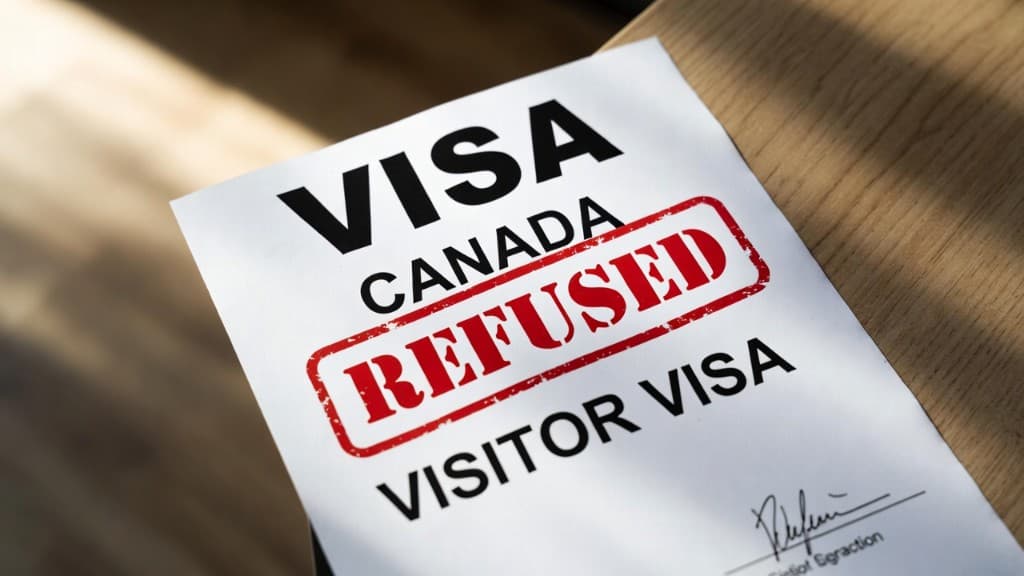
2025–2026 brought lower temporary-resident targets, TR document cancellation rules in force from January 31, 2025, and harder-line integrity messaging at IRCC. The legal test is still IRPA 11(1) / IRPR 179— but reapplications are read more strictly; the file has to make the officer's job easy.
Playbook: landscape, officer powers, refusal-rate context, steps, document pack, do/don'ts, and Canada.ca submission mechanics. Refusal taxonomy: Canada visitor visa refused — top reasons + resubmission guide (2026). If your refusal pointed at ties, our companion guide is Weak ties Canada visitor visa refusal — how to fix it.
The 2026 IRCC landscape, in three points
The three items below are what actually moves how your reapplication is read.
- Levels Plan 2025–2027. Canada's Immigration Levels Plan announced in October 2024 cut overall permanent resident targets and, for the first time, set explicit targets for net new temporary resident arrivals. The Government's stated goal has been to bring the temporary resident share of the Canadian population to roughly 5% by the end of 2026 — a meaningful reduction from peak levels. For visitor visa applicants this means more selective approvals at the margin, particularly in higher-volume source markets.
- Officer cancellation powers (in force January 31, 2025). The Regulations Amending the Immigration and Refugee Protection Regulations registered on December 17, 2024 give the Minister and delegated officers explicit authority to cancel a temporary resident document — visitor visa, eTA, study permit, or work permit — at any time on specified grounds, including inadmissibility, no longer meeting requirements, issuance in error, holder reported deceased, or the document being lost, stolen, destroyed, or abandoned. This is the most consequential change to visitor visa enforcement in years.
- Public statements from the Minister of Immigration in 2025–2026. The Immigration Minister's public messaging through 2025 and into 2026 has consistently emphasised three themes: integrity (cracking down on fraud and document misuse), volumes (bringing temporary resident numbers down to a sustainable share of population), and selectivity (prioritising applications that clearly meet the criteria over borderline files). Refusal-by-refusal reapplications must be read against this backdrop — officers are not looking to be talked into approvals.
What visa officers can do in 2026 that they could not do before
The Regulations Amending the Immigration and Refugee Protection Regulations registered on December 17, 2024 (in force January 31, 2025) gave the Minister and delegated officers explicit authority to cancel a temporary resident document at any time. The grounds are spelled out in the amended IRPR; the most relevant for visitor visa applicants are:
- The holder is or has become inadmissible to Canada under IRPA.
- The holder no longer meets the requirements of the document — for example, ties or purpose-of-visit facts have changed materially.
- The document was issued in error.
- The holder has been reported deceased.
- The document has been lost, stolen, destroyed, or abandoned.
Practically: describe a trip you will actually take (dates, host, accommodation, purpose) and keep facts consistent — the file should still make sense throughout the visa's validity if credibility was questioned before.
Canada visitor visa refusal rates — what the IRCC data says
IRCC publishes monthly TRV outcomes in its Open Data portal — applications received, approved, and refused, broken down by visa office and source country. Approval rates vary widely: some markets approve over 90% of applications; others approve under a third. Before you assume a global average, check the rate for your country and visa office. The patterns below are directional, drawn from recent IRCC Open Data periods — your reapplication should be calibrated to the band you are in.
| Source-market band | Approval rate pattern | Reapplication takeaway |
|---|---|---|
| Established travel markets (UK, EU, Japan, South Korea, Australia, etc.) | Approval rates often above 90% in recent IRCC Open Data periods | A refusal here is unusual — read the GCMS notes carefully. The fix is usually a single concrete gap, not a rebuild. |
| Mid-volume markets (UAE, KSA, Qatar, Mexico, Brazil, Türkiye) | Approval rates in a wide 60–85% band depending on office and quarter | Documentary discipline matters: organic funds, current employment letter, specific itinerary, and a tight cover letter usually decide. |
| Higher-refusal markets (parts of South Asia, West Africa, North Africa, Iran) | Approval rates have run in the 25–55% range in recent IRCC Open Data periods | Assume you have one good shot. Build the strongest reapplication you can: GCMS notes, ties matrix, six-month bank statements, and a specific purpose-of-visit document trail. |
These bands are directional and drawn from publicly available IRCC Open Data; the precise rate for your country and quarter may differ. Pull the latest dataset from IRCC Open Data before relying on a number for any planning purpose.
Reconsideration, judicial review, or reapply?
After a TRV refusal you have three real paths. Most applicants pick the wrong one because they do not know the trade-offs.
A short web-form request to IRCC asking the same office to look again. Free. Rarely succeeds without genuinely new evidence the officer did not see. Best when you can prove a clerical error.
Application for leave and judicial review under the Federal Courts Act. CAD $50 to file plus counsel fees. Narrow legal grounds (procedural unfairness, unreasonable decision), 15-day filing deadline if you applied from inside Canada, 60 days if from outside.
A new, stronger TRV application targeted at the officer's actual concerns. The pragmatic path for the overwhelming majority of refusals — fast, controlled, and the best fit under 2026 IRCC operations.
Step-by-step: how to reapply in 2026
A clean reapplication is six steps over roughly four to eight weeks. The instinct is to rush — resist it. The first weeks are for diagnosis, not action.
| Step | When | What to do |
|---|---|---|
| 01 | Day 1–2 | Read the refusal letter carefully — twice. List each concern the officer named, in the order they appear. Do not start drafting a new application yet. Save the original PDF; you will quote from it later. |
| 02 | Day 3–5 | File an ATIP request for your GCMS notes. The fee is CAD $5 through the Government of Canada ATIP Online Request portal. If you are outside Canada, ask a Canadian citizen, permanent resident, or any individual present in Canada to file on your behalf with your written consent. |
| 03 | Day 6–14 | While the GCMS notes are processing, audit your evidence in the categories officers actually weigh: ties, purpose, funds, host status, documentation. Build a fix list per category — what document is missing, who can produce it, by when. |
| 04 | Day 15–45 | GCMS notes typically arrive 30–90 days after the request in 2026. Read the final officer note line by line — that is the sentence you address head-on in your reapplication cover letter. |
| 05 | Pre-submission week | Build the reapplication pack: refusal-by-refusal cover letter, exhibit index, ties matrix, organised PDFs in IRCC online portal upload order. Cross-check every date and dollar figure across forms (IMM5257, IMM5645), itinerary, host invitation, and bank statements. They must all agree. |
| 06 | Submission day | Submit online via the Canada.ca visitor-visa flow (IRCC Portal or the tool the questionnaire assigns). Pay current fees; save your confirmation. Do not book non-refundable flights before issuance — it does not help the decision. |
Online application: what IRCC expects you to do
Before you start. File again only if something material changed or you have new documents that speak directly to the reasons in your refusal letter. Your LoE/cover letter should answer each point in order and point to exhibits.
Fees. A new application means paying again — fees are not transferred from a refused file. Visitor visa processing is typically CAD $100; CAD $85 biometrics apply when the system tells you to give them. Prior biometrics often stay valid for up to 10 years — confirm against your own account and Canada.ca biometrics guidance.
Where to sign in. Start from Apply for a visitor visa. Use the same sign-in as last time (GCKey, Sign-In Partner, or the portal credentials you already used). Direct portal sign-in: portal-portail.apps.cic.gc.ca. Answer honestly about prior applications and refusals — IRCC already sees the refused file. If Canada.ca shows an “IRCC Portal – New version”, read its eligibility first; reapplicants usually stay on the standard portal unless the site routes you elsewhere. The questionnaire generates a personalized document checklist— follow it and still upload your refusal-driven exhibit plan.
After you submit. Check your account for messages, watch current processing times, and if you are approved and asked for a passport, follow the passport instructions in your account letter.
GCMS notes — and why they decide your reapplication
GCMS (Global Case Management System) is the platform IRCC officers use to record decisions. The refusal letter you receive is templated and short. The GCMS notes are the officer's actual reasoning — usually a paragraph or two in plain language, far more specific than the letter. They tell you which boxes the officer felt were unticked. Your reapplication should target those exact boxes.
- Cost. CAD $5 via the Government of Canada ATIP portal.
- Who can file. Per IRCC's Help Centre: Canadian citizens, permanent residents, or any individual present in Canada may file an Access to Information request. Refused applicants abroad typically ask a Canadian citizen, PR, or person physically in Canada to file with their written consent.
- Turnaround in 2026. Legislated 30 days; in practice 30–90 days. Plan your reapplication around the notes if your trip dates allow.
- What to look for. The final officer note. That is the sentence — usually one or two lines — that captures the officer's ultimate reasoning. Quote it in your reapplication cover letter and answer it directly.
What a strong 2026 reapplication actually contains
A strong reapplication is not “more documents.” It is the same set of categories every other applicant has, organised so the officer can tick their boxes in three minutes and move on. The categories below are the ones that matter; everything else is supporting.
Letter of Explanation (LoE) / cover letter
- A 2–3 page refusal-by-refusal LoE or cover letter — same job — quoting each concern from your refusal letter (and GCMS, once you have it) and answering each with a pointer to a specific exhibit number
- A one-page exhibit index (Exhibit #, document name, page count, what it proves)
- A one-page ties matrix (Category, Evidence Provided, How It Proves Return, Exhibit #)
Identity and forms
- Passport bio page and every page with stamps; expired passports if travel history is on them
- IMM5257 (TRV application) and IMM5645 (family information) — internally consistent on dates, addresses, and dependants
- Two recent passport-style photographs meeting IRCC specifications
Ties evidence
- Letter of employment on letterhead, dated within 30 days, stating role, start date, salary, contract type, and approved leave dates
- Last 3 pay slips and the most recent tax return for your country of residence
- Property title or long-term lease in your name; most recent property tax notice or utility bill
- Six months of bank statements on official letterhead — full transaction history, not just balances
- Investment, fixed-deposit, or pension certificates as applicable
Purpose of visit
- A specific itinerary by date and city, with accommodation names and addresses
- Letter of invitation from the host (where applicable) naming dates, address, and host's status in Canada
- Host's status documents — PR card, citizenship certificate, valid permit and counterfoil — with status held for at least 6 months where possible
- Event documents (wedding, graduation, conference registration) where the trip is tied to a specific event
- Refundable or hold flight reservation matching the itinerary; do not book non-refundable airfare before approval
Family and dependants left at home
- Marriage certificate; birth certificates for children; school enrolment letters covering the trip dates
- Identity documents for dependent parents you support, plus medical/retirement records and your remittance history
- If travelling solo, a short paragraph in the cover letter explaining the household arrangement
Translations and quality
- Certified English or French translations of every non-English/non-French document, packaged with the original in the same PDF
- OCR-readable merged PDFs: use the same naming scheme as your exhibit index (01_letter_of_explanation_reapplication.pdf through 08_invitation_letter_and_host_status.pdf, then 09_ties_evidence_* for extra tie bundles). Rename the file to match each IRCC portal upload slot if the checklist requires a fixed name.
- Consistent name spelling across every document, exactly as in the passport
For a deeper walkthrough of the ties paragraph and a sample ties matrix you can copy into your file, see the weak-ties fix guide.
LoE, invitation letter, exhibit index — and how to name files
Bracketed fields are placeholders. Replace them with your facts; align exhibit numbers with what you actually upload. These samples are educational only — not legal advice.
Letter of Explanation (LoE) after a refusal
Refusal-by-refusal structure: quote each concern, answer with facts, point to an exhibit.
Replace [BRACKETED] placeholders; paste exact refusal wording; match exhibit IDs to your index.
[DATE — e.g. 2026-05-08]

Immigration, Refugees and Citizenship Canada

Re: Temporary Resident Visa (Visitor) — Reapplication
Applicant: [FULL NAME EXACTLY AS IN PASSPORT]
Date of birth: [YYYY-MM-DD]
Passport: [NUMBER] ([COUNTRY])
UCI (if any): [UCI OR “N/A”]
Prior refusal date: [DATE ON REFUSAL LETTER]

Dear Visa Officer,

I am submitting a new visitor visa application following a refusal dated [REFUSAL DATE]. Below I address each concern stated in that refusal letter [and, where applicable, the final officer note in my GCMS notes dated [GCMS DATE]]. Exhibit numbers match the exhibit index submitted with this application.

Concern 1 — quoted from the refusal letter:
“[PASTE EXACT WORDING — CONCERN 1]”

My response:
[2–5 sentences: facts only, what changed, or what evidence clarifies a misunderstanding.] See Exhibit [E-#].

Concern 2 — quoted from the refusal letter:
“[PASTE EXACT WORDING — CONCERN 2]”

My response:
[2–5 sentences.] See Exhibit [E-#].

[Repeat for every distinct concern in the refusal letter and any material point in GCMS.]

Purpose of visit (summary):
I intend to travel to Canada from [ARRIVAL DATE] to [DEPARTURE DATE] to [SPECIFIC PURPOSE — e.g. attend X, visit family in Y]. Cities: [LIST]. Accommodation: [NAME + ADDRESS]. I am not seeking work or study in Canada. See Exhibits [E-# to E-#].

Ties to home country (summary):
[Employment / business / property / family / other — one line each, tied to exhibit numbers.] See Exhibits [E-# to E-#].

Funds:
I will fund this trip from [SOURCE — salary / savings / business]. Six months of statements are at Exhibit [E-#]. Large deposits, if any, are explained at Exhibit [E-#].

I confirm that this letter is consistent with my IMM5257, IMM5645, itinerary, and all uploaded documents.

Sincerely,

[SIGNATURE if printing]
[FULL NAME]
[ADDRESS]
[EMAIL] · [PHONE]
Sample invitation letter (host in Canada)
Host writes; visitor attaches to the application. Dates and address must match the visitor's itinerary and forms.
Host fills bracketed fields; visitor should mirror dates and cities in IMM5257 and itinerary.
[HOST FULL NAME]
[HOST STREET ADDRESS]
[CITY, PROVINCE]  [POSTAL CODE]
Canada
[EMAIL] · [PHONE]

[DATE]

To the Visa Officer
Immigration, Refugees and Citizenship Canada

Re: Letter of invitation — visitor: [VISITOR FULL NAME]
Date of birth: [YYYY-MM-DD] · Passport: [NUMBER] ([COUNTRY])
Intended visit: [START DATE] to [END DATE]

Dear Officer,

I am writing to support the visitor visa application of [VISITOR FULL NAME], who is my [RELATIONSHIP — e.g. mother / friend / sibling].

My status in Canada: [Canadian citizen / permanent resident / valid work or study permit holder — specify]. [Optional: UCI [NUMBER].]

Purpose of the visit:
[Visitor name] plans to visit me in Canada from [START DATE] to [END DATE]. During the stay we will [SPECIFIC PLAN — cities, events, family occasions — match the applicant’s itinerary].

Accommodation:
While in Canada, [visitor name] will stay at: [FULL ADDRESS — must match lease, title, or utility bill you attach].

Financial arrangement:
[Choose one and delete the other:]
(A) [Visitor name] is responsible for all travel costs, personal expenses, and medical insurance for this trip. I am not providing financial support beyond [FREE ROOM / shared meals — specify or write “hospitality only”].
(B) I will provide the following support: [SPECIFY — e.g. room and board only / contribution toward X]. [Visitor name] pays for: [LIST].

I understand that a letter of invitation does not guarantee that a visa will be issued and that [visitor name] must meet all requirements under the Immigration and Refugee Protection Act and regulations.

Sincerely,

[HOST PRINTED NAME]
[HOST SIGNATURE if sending a signed scan]

Enclosures (host): [e.g. copy of PR card / citizenship proof / permit and study or work details — list what you actually attach]
Sample exhibit index (one page)
Officers scan this first — one entry per PDF bundle; file names should match what you upload and what you cite in the LoE.
Edit File: lines to your real PDF names; fix page counts after merging.
EXHIBIT INDEX

Applicant: [FULL NAME]
Application: Canada visitor visa (reapplication) — [MONTH YEAR]
Prior refusal date: [DATE]
Note: Exhibit numbers match the Letter of Explanation. The “File” line is the exact PDF name on disk / in your upload bundle — all lowercase, two-digit prefix, underscores (rename only if the IRCC portal slot forces a different final name).


E-1
Title:   Letter of Explanation (this reapplication)
File:    01_letter_of_explanation_reapplication.pdf
Pages:   [#]
Proves:  Addresses each refusal concern; points to the evidence below.

E-2
Title:   Passport — bio page, signature page, and pages with visas/stamps
File:    02_passport_bio_and_travel_stamps.pdf
Pages:   [#]
Proves:  Identity; travel history.

E-3
Title:   IMM5257 and IMM5645 (as filed / merged PDF)
File:    03_imm5257_imm5645_merged.pdf
Pages:   [#]
Proves:  Biographical details are consistent across forms.

E-4
Title:   Employment — letter on letterhead, pay slips, [tax or HR document]
File:    04_employment_letter_pay_and_tax.pdf
Pages:   [#]
Proves:  Job, income, and return obligation (e.g. approved leave dates).

E-5
Title:   Bank statements — last six months, official format
File:    05_bank_statements_six_months.pdf
Pages:   [#]
Proves:  Organic funds; aligns with stated income.

E-6
Title:   Home tie — [property deed OR long-term lease] plus one supporting bill
File:    06_home_tie_property_or_lease_plus_utility.pdf
Pages:   [#]
Proves:  Strong tie to country of residence.

E-7
Title:   Trip plan — itinerary plus [flight hold or other travel intent]
File:    07_itinerary_and_travel_intent.pdf
Pages:   [#]
Proves:  Specific dates, cities, and purpose of visit.

E-8
Title:   Invitation package — host letter plus host status in Canada
File:    08_invitation_letter_and_host_status.pdf
Pages:   [#]
Proves:  Host relationship and host’s legal status.


Add E-9 onward for every other PDF. Optional extra ties bundles (same naming style, continue the number series): 09_ties_evidence_1_aging_parents.pdf, 10_ties_evidence_2_business_ownership.pdf, 11_ties_evidence_3_property_ownership.pdf, 12_ties_evidence_4_family_ties.pdf, 13_ties_evidence_5_travel_history.pdf, 14_ties_evidence_6_financial_history.pdf, 15_ties_evidence_7_other_evidence.pdf
How to organize and name supporting PDFs
IRCC portals often ask for fixed slot names on upload (e.g. client_information.pdf). Build your own pack first with one consistent scheme (below), then rename the merged file to the slot name only at attach time if required.
Core merged PDFs use 01_– 08_ exactly like the exhibit index above. If you split ties into separate files, continue the series:
09_ties_evidence_1_aging_parents.pdf10_ties_evidence_2_business_ownership.pdf11_ties_evidence_3_property_ownership.pdf12_ties_evidence_4_family_ties.pdf13_ties_evidence_5_travel_history.pdf14_ties_evidence_6_financial_history.pdf15_ties_evidence_7_other_evidence.pdf
Same pattern everywhere: nn_category_short_descriptor.pdf (two-digit nn, lowercase, underscores). Core reapplication files run 01_– 08_like the exhibit index; split heavy ties into 09_– 15_ (or continue the series). Keep numbering aligned with your exhibit index and LoE citations.
Do — strong reapplication moves
Wait for your GCMS notes before reapplying when the timeline allows.
The notes tell you what the officer actually thought. Reapplying without them is guessing.
Quote the prior refusal letter line by line in your new cover letter.
It signals to the next officer that you read the prior decision and rebuilt the file around it — not that you ignored it.
Lead with the ties matrix and the exhibit index.
Officers scan files in a few minutes. A one-page table that points to numbered exhibits gets your case ticked faster than long prose.
Make the funds look organic.
Six months of statements with regular salary or business income flowing in — and ordinary spending flowing out — beats a higher balance with no transaction history.
Match every date across forms, host invitation, leave letter, itinerary, and flight reservation.
Mismatched dates are the fastest way an officer infers the file is not real. The fix is checklist discipline.
Acknowledge anything unusual in your file before the officer has to ask.
A two-sentence explanation in the cover letter for a recent divorce, gap year, prior refusal in another country, or recent job change disarms the officer's natural objection.
Keep the cover letter under 3 pages.
Brevity is a signal of organisation. Long cover letters read as nervous; short ones with sharp exhibit pointers read as competent.
Plan to actually behave the way your application says you will.
Under the 2025 cancellation regulations, IRCC officers can cancel temporary resident documents at any time. Live the trip you described.
Don't — what kills reapplications
Don't reapply with the exact same file the next day.
The new officer can see the prior refusal. Without changes, identical inputs produce identical outputs.
Don't deposit a lump sum into your bank account days before reapplying.
It looks staged. Officers scan for the pattern, not the balance. Build organic funds over months, not days.
Don't write a long, emotional cover letter.
Officers do not have minutes to spare on tone. They are looking for facts and exhibit numbers — not a personal story.
Don't quietly change facts that were in your prior application.
Officers compare new and old files. If you correct something, name the correction explicitly. Silent edits read as misrepresentation under IRPA s.40.
Don't ask a recently-arrived host on temporary status to be your financial sponsor.
It signals that the visit is propping up the host's status story. Pay your own way and document it; ask the host to invite you, not fund you.
Don't book non-refundable flights or pre-pay for tours before approval.
It does not pressure the officer to approve, and a refusal will cost you the money. Use refundable holds or letters of intent.
Don't ignore the GCMS notes once they arrive.
If the notes raise an issue your reapplication does not address, the next officer is entitled to draw the same conclusion. Address it head-on.
Don't apply through agents who file on your behalf without explaining the file.
Generic agent-filed applications under-perform. If you use a representative, choose a Regulated Canadian Immigration Consultant (RCIC) or immigration lawyer who can build the cover letter with you.
Common reapplication mistakes (and the fix)
Most refused-twice patterns repeat the same five mistakes. Audit your file against each before you submit.
- Mistake
Reapplying within days of the refusal with no new evidence and a slightly reworded cover letter.
FixWait for GCMS notes, gather new evidence, and address each prior concern with a specific exhibit.
- Mistake
Stuffing the file with 80+ pages of unsorted documents and no exhibit index.
FixCurate. Twenty well-organised exhibits with a one-page index beat eighty unsorted pages.
- Mistake
Showing only the most recent month of bank statements with a healthy closing balance.
FixSubmit six months on official letterhead with full transaction history that matches your stated income.
- Mistake
Writing a vague itinerary — 'I will visit Toronto and surrounding areas.'
FixName the cities, dates, accommodations, and the people or events tied to each leg of the trip.
- Mistake
Pretending the prior refusal did not happen.
FixReference it, quote each concern, and answer it. The next officer reads the prior decision before yours.
Paste your IRCC refusal letter. Get a ranked analysis of why IRCC refused you and what you must fix.
Paste refusal reasons into the assistant. Answer a few questions. Unlock the 1–2 page analysis.
- Ranked list of the refusal reasons from your letter.
- What the officer needs to see for each reason.
- The documents you must prepare this week.
- 1–2 page personalized analysis. $69 CAD. One-time. No subscription.
Frequently asked questions about reapplying in 2026
Can I reapply for a Canada visitor visa immediately after a refusal in 2026?
Yes — no statutory cooling-off period for a standard TRV refusal under IRPR 179 / IRPA 11(1). Same-day reapplication is allowed. Practically, a file that mirrors the refusal usually gets the same result: the next officer sees the prior refusal. Reapply when you have new evidence, a refusal-by-refusal letter (LoE), and ideally GCMS notes.
What changed for Canada visitor visa applicants in 2025–2026?
Lower temporary-resident targets (Levels Plan), cancellation authority for TR documents in force from January 31, 2025, and tighter integrity messaging. The legal test for a visitor visa is unchanged; the bar for how clearly your file proves it is higher. Details are in the article sections above.
What is the current Canada visitor visa refusal rate?
IRCC publishes monthly TRV outcomes in its Open Data portal — applications received, approved, and refused, broken down by visa office and source country. Approval rates vary widely by country: in recent years some source markets have approved over 80–90% of TRV applications while others have approved under 30%. Globally, refusals on TRV applications routinely hover in the 40–60% range depending on the period. Check the IRCC Open Data set for the rate that applies to your country and visa office before assuming a global average.
Should I get my GCMS notes before I reapply?
In almost every case, yes. GCMS notes are the case-management entries the visa officer wrote when reviewing your file — released under the Access to Information and Privacy Act for CAD $5. The refusal letter is templated; the GCMS notes are specific. They tell you which boxes the officer felt were unticked. Reapplying without the notes means guessing at the officer's actual reasoning. The legislated turnaround is 30 days; in 2026, real-world turnaround for IRCC ATIP requests routinely runs 30–90 days.
Will reapplying multiple times hurt my chances?
It depends on what changes between attempts. If each new application brings substantively new evidence and a tighter cover letter that addresses the previous refusal, repeat applications are not held against you in principle. If you reapply with essentially the same file two or three times, officers reading attempt 4 will see a pattern of identical files refused — and refusal becomes the path of least resistance. There is no formal cap, but the burden of proof rises with each repeat.
Do the 2025–2026 changes mean I should hire an RCIC or lawyer to reapply?
Not automatically. Most TRV refusals are still resolvable with a well-organised, refusal-by-refusal reapplication. Consider a Regulated Canadian Immigration Consultant (RCIC) or immigration lawyer if your refusal mentions misrepresentation under s.40 of IRPA, criminal or medical inadmissibility, repeated refusals (three or more), or if you are considering Federal Court judicial review. For a clean TRV refusal under IRPR 179, the cover letter and exhibits do most of the work.
Can my visitor visa be cancelled after it is approved in 2026?
Yes, under the regulations in force from January 31, 2025. A document can be cancelled where the holder is or becomes inadmissible, no longer meets requirements, the document was issued in error, the holder is reported deceased, or the document is lost, stolen, destroyed or abandoned. In practice, lawful visitors who travel as described in their application have nothing to worry about. The risk lies in dramatic divergence — for example, the application is for a 10-day visit and the holder lingers for months, takes unauthorised work, or the underlying facts in the application turn out to be misstated.
How long does a Canada visitor visa refusal stay on my record?
Indefinitely. IRCC retains the application record in its case management system permanently, and a visa officer reviewing any future application — TRV, study, work, or PR — can see prior refusals. This is one reason a strong reapplication matters: the second decision becomes part of the same long record. A clean approval after a refusal mitigates the prior refusal; another refusal compounds it.
Is judicial review at the Federal Court worth it for a visitor visa refusal?
For most visitor visa refusals, no. Federal Court judicial review is a narrow remedy — it asks whether the officer's decision was reasonable and procedurally fair, not whether you should have been approved. Filing fee is CAD $50 plus counsel costs (typically several thousand CAD). Deadlines are tight: 15 days from receipt of the decision if you applied from inside Canada, 60 days if from outside. Use it for principled errors of law, recurring office-level issues, or cases where reapplication will not work. For a typical IRPR 179 ties refusal, a clean reapplication is faster, cheaper, and more likely to produce a visa.
Government sources
Primary legislation, the 2024 regulatory amendments, IRCC guidance, IRCC Open Data, and Federal Court references — all official government sites.
- Canada.ca — Apply for a visitor visa (official entry hub)
- IRCC Portal — sign in
- Canada.ca — IRCC fee list (application fees)
- Canada.ca — Biometrics collection and validity
- Canada.ca — Check IRCC processing times
- Immigration and Refugee Protection Act — section 11 (visa after examination)
- Immigration and Refugee Protection Act — section 40 (misrepresentation)
- Immigration and Refugee Protection Regulations — section 179 (temporary resident visa)
- Regulations Amending the Immigration and Refugee Protection Regulations — Canada Gazette, Part II (Volume 159, December 2024)
- Government of Canada — 2025–2027 Immigration Levels Plan announcement
- Canada.ca (IRCC) — Understand your visitor visa application refusal
- IRCC Help Centre — My application for a visitor visa was refused. Should I apply again?
- IRCC Help Centre — Who can make a request under the Access to Information Act?
- IRCC Help Centre — What is the fee for an Access request?
- IRCC Open Data — Temporary Resident Visa applications and outcomes
- Federal Court of Canada — Court and registry fees
- Federal Court of Canada — Application for leave and judicial review (immigration): procedural chart
This article was written by Immigration DM editorial using public legislation, the 2024 regulatory amendments (registered December 17, 2024 and in force January 31, 2025), IRCC Help Centre guidance, IRCC Open Data on TRV outcomes, and our pattern analysis of Canada visitor visa refusal letters and GCMS notes. It is general information, not legal advice. Every visitor visa case is unique; consider speaking with a Regulated Canadian Immigration Consultant (RCIC) or immigration lawyer for case-specific guidance, especially where misrepresentation, inadmissibility, or repeat refusals are involved.